


A security tool that developers hate will not make code safer. Engineers find ways around it. They ignore its alerts. They leave it turned off. The best security in the world does nothing if the team refuses to use it.
Developer experience in security comes down to a few things. Fast scans that do not interrupt coding flow. Alerts that are actually correct. Fixes that do not require leaving the IDE. Clear dashboards instead of confusing severity scores.
The platforms below put developers first. Some embed scanning directly into GitHub and GitLab. Others offer a one-line setup with results in minutes. A few automatically filter false positives before engineers ever see them. All of them understand that security works best when developers do not have to fight it.
1. Aikido
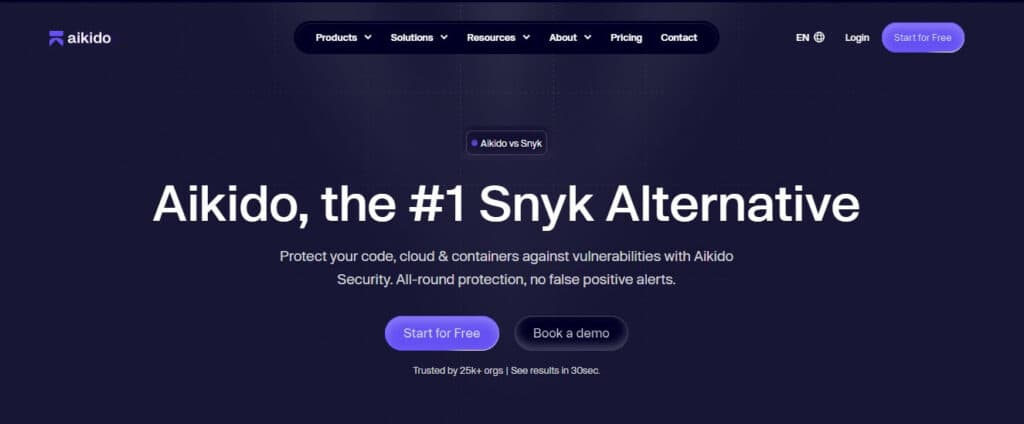
Gartner Peer Insights reviewers keep praising Aikido. They talk about easy setup and a clean interface. One engineering lead said the product does everything needed, but the support makes it a joy to work with. Another reviewer called Aikido fast, focused, and developer-friendly, with a clean UI that does not overwhelm.
Why developers like Aikido:
- Setup finishes in minutes, not days
- Human support responds on Slack, no bots
- The mute feature silences irrelevant alerts without losing critical ones
- Centralized issue feed pulls findings from across the SDLC into one place
- Dashboard is crystal clear instead of confusing severity scores
Aikido reaches into the IDE with VS Code and JetBrains extensions. Developers see security findings without switching windows. AI-powered triage filters false positives before they reach engineers. For teams looking for developer-friendly Snyk alternatives, Aikido proves that security can work inside existing workflows.
The platform replaced six separate AppSec tools for Prove, including Snyk and Checkmarx. One security leader described the experience simply: “If Aikido were a car, it would be a Porsche”; powerful and efficient without extra parts.
Who this platform fits: Developers tired of fighting their security tools who want a fast setup and helpful support.
2. Semgrep
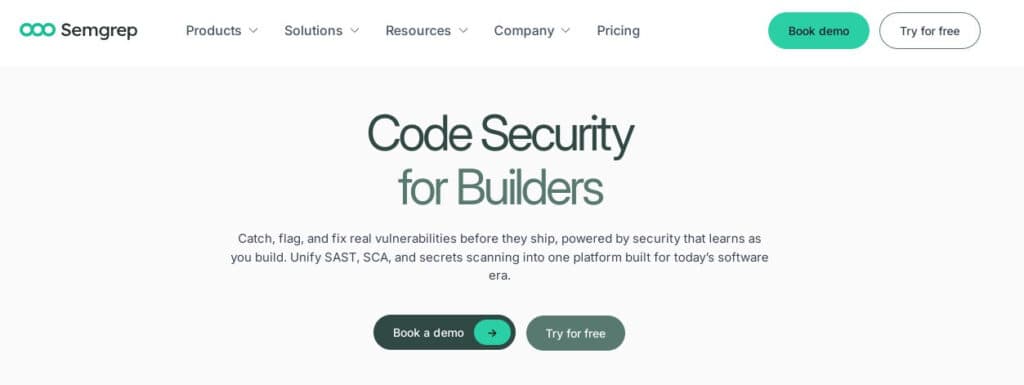
Semgrep combines an open-source core with commercial options for enterprises. Unlike traditional SAST tools that require complex configuration, Semgrep uses simple rule syntax that looks like the code it scans. Developers can write custom rules in minutes.
Why developers like Semgrep:
- Fast local scans with minimal resource overhead
- Rules written in YAML that read like the code being checked
- Community rules set with continuous improvements
- Deep IDE integration for VS Code and JetBrains products
- Reachability analysis prioritizes issues that are actually exploitable
Semgrep scans run locally or in CI/CD pipelines. No cloud upload required for basic scans. Teams with strict data residency requirements can keep code on their own infrastructure.
Pricing starts free for open-source projects. Team plans begin at $30 per contributor per month. Enterprise custom pricing includes governance features. For organizations seeking affordable options in Snyk alternatives, Semgrep offers a genuine free tier with no time limits.
G2 rates Semgrep at 4.6/5. Users praise its speed and customizability, noting it produces fewer false positives than Snyk Code.
Who this platform fits: Developers who want customizable SAST without waiting for vendor updates.
3. Black Duck
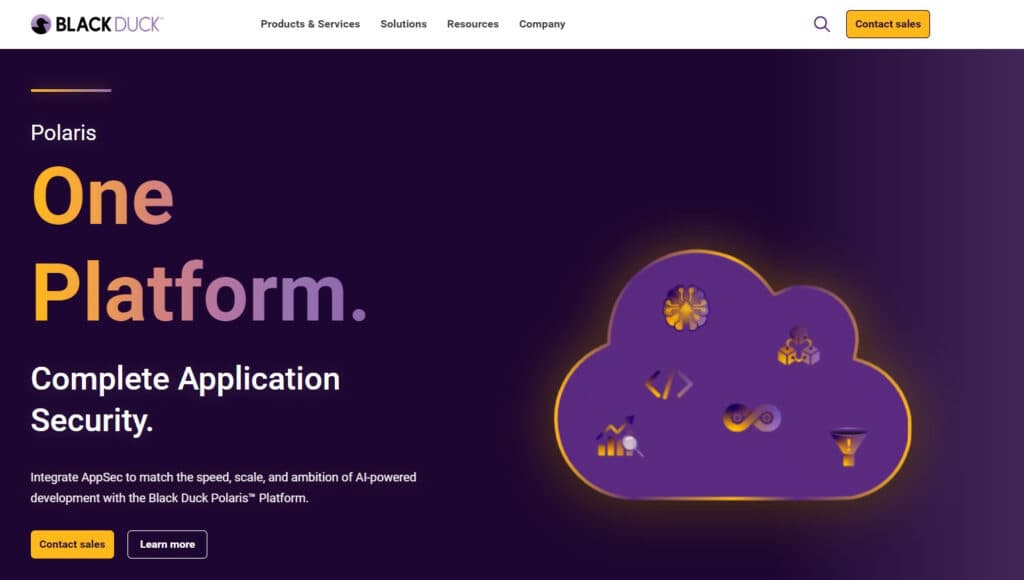
Black Duck Polaris consolidates SAST, SCA, DAST, and AI security scanning into one platform. The 2026 releases added Signal, an agentic AI scanner for AI-generated code. For developers, the value is consolidated findings in one dashboard instead of multiple tools.
Why developers like Black Duck:
- Single dashboard for all security findings across SDLC
- Automated remediation pull requests for vulnerable dependencies
- Bulk CI onboarding for GitLab and Bitbucket pipelines
- Bridge CLI imports Signal findings as External Analysis issues
- License Manager shows compliance status without legal tickets
Black Duck recently added bulk CI onboarding for GitLab and Bitbucket pipelines. Teams inject Security Scan steps directly into existing pipeline configurations. The guided flow generates pull or merge requests with necessary changes.
License Manager provides a centralized view of licenses in use, license terms, organizational fields, and usage across projects. Deep License Data shows evidence-backed license insights at global, application, and project levels.
For teams comparing top security firms vs Snyk alternatives, Black Duck offers depth in open-source governance. G2 rates Black Duck at 4.0/5. Users commend its accuracy and comprehensive coverage, though smaller teams may find it complex.
Who this platform fits: Developers in regulated enterprises who need open-source governance built into their workflow.
4. Anchore
Anchore takes a policy-as-code approach to container security. Developers define rules for what passes and what fails. Every container image must meet security standards before hitting production. The platform integrates directly into CI/CD pipelines.
Why developers like Anchore:
- Deterministic on-disk file scanning instead of manifest guessing
- Distroless images shrink the attack surface by removing unnecessary operating system components, which means fewer built-in vulnerabilities to scan for
- Automated discovery-to-ticketing loop creates tickets, coordinates fixes, and scans again
- SBOM generation for supply chain transparency
- Deeper accuracy than traditional SCA tools that guess installed packages
Mattermost automated its container vulnerability scanning with Anchore Enterprise. Eva Sarafianou, Senior Engineering Lead at Mattermost, noted: “With containers, you aren’t only shipping an app. You’re shipping an entire OS. SCA tools don’t have OS vulnerability visibility”.
Anchore does not make assumptions about what is installed. The platform looks at what is on disk and what is in the file system. This deterministic scanning produces accurate data instead of noise. Mattermost transformed its fragmented, manual scanning process into an automated, closed-loop security flywheel.
A free open-source CLI gives teams container scanning without licensing costs. Enterprise plans add policy enforcement and compliance reporting.
Who this platform fits: Developers shipping containers who want policy-as-code without managing complex infrastructure.
5. FOSSA
FOSSA helps thousands of organizations automate license compliance, prioritize vulnerabilities, generate SBOMs, and meet regulatory requirements. The platform recently partnered with SCANOSS to detect open source license violations introduced by AI coding tools.
Why developers like FOSSA:
- Automated license compliance without legal tickets
- Vulnerability prioritization based on actual risk
- SBOM generation built into the workflow
- AI-generated code scanning for IP risks
- Works across engineering, security, and legal teams
FOSSA scans AI-generated code for snippet-level open source similarity. GitHub reports that in files where Copilot is enabled, nearly 40% of code is AI-generated. FOSSA helps teams catch license violations before they become legal problems.
The platform earned recognition as a Built In Best Startup to Work For in 2024, 2025, and 2026. FOSSA offers a free tier for open-source projects. Paid plans begin at $1,000 per month and scale with scanned repositories.
Who this platform fits: Developers using AI coding tools who need license compliance built into their workflow.
6. Tenable
Tenable One serves approximately 44,000 customers globally. The platform unifies vulnerability management across traditional infrastructure, cloud workloads, containers, and web applications.
Why developers like Tenable:
- Vulnerability Priority Rating (VPR) identifies the 1.6% that truly matters
- Asset context shows production vs staging so developers fix what matters first
- AI-generated threat summaries and remediation guidance
- Graph-based multi-cloud exploration with granular filters
- External network scanner validates reachability before alerting
Tenable recently added automated VM workload protection. The platform detects unprotected VMs in AWS, Azure, and GCP, then automatically installs the Defender agent. The Vulnerability Dashboard provides a single pane of glass view into prioritized vulnerabilities across code, build, deploy, and runtime phases.
For developers asking which Snyk alternatives have low noise, Tenable’s VPR eliminates 98.4% of vulnerabilities from immediate remediation consideration. Teams focus only on issues attackers are likely to exploit.
Who this platform fits: Developers in large enterprises who need vulnerability prioritization that cuts through the backlog.
What Makes Security Tools Developer-Friendly
Developer experience in security is not about fancy interfaces. It is about removing friction.
- Fast feedback loops matter most. A scan that takes ten minutes breaks the flow. A scan that runs in seconds becomes invisible. Semgrep and Aikido both prioritize speed, with local scans and IDE integration that show results before context switches.
- Accurate alerts matter second. Developers stop trusting tools that cry wolf. Aikido’s AI triage filters false positives before developers see them. Tenable’s VPR eliminates 98.4% of vulnerabilities from immediate consideration. Anchore’s on-disk scanning avoids manifest guessing. Each platform reduces noise differently, but all prioritize accuracy over volume.
- Workflow integration matters third. Security findings should appear where developers already work. Aikido reaches into VS Code and JetBrains. Semgrep offers deep IDE integration. Anchore builds directly into CI/CD pipelines. Developers do not need to learn new portals.
The Cost of Ignoring Developer Experience
When developers hate their security tools, they find workarounds. They disable alerts. They ignore dashboards. They skip scans. The tool becomes expensive shelfware.
The opposite is also true. When developers trust their security tools, they fix more issues. Aikido customers report fixing vulnerabilities faster because findings tie directly to code lines. Prove consolidated six tools into Aikido and saw faster remediation.
Semgrep users appreciate custom rules that match their specific codebase. Anchore customers like seeing exactly what is vulnerable and why. FOSSA teams avoid legal headaches because license compliance is automated.
For organizations looking for Snyk alternatives for cloud and code security, developer experience determines whether the tool gets used. A platform with perfect coverage but terrible UX will fail. A platform with good coverage and great UX will succeed. Developers vote with their attention. Smart security teams listen.
Final Thoughts
Developer experience determines whether security tools get used or ignored. Fast scans. Accurate alerts. Workflow integration. These matter more than feature checklists.
Aikido delivers fast setup, clean UI, and human support that developers actually like using. Semgrep offers customizable SAST with community rules and IDE integration. Black Duck consolidates findings into one dashboard for regulated enterprises. Anchore provides policy-as-code container security with deterministic scanning. FOSSA automates license compliance for AI-generated code. Tenable cuts through vulnerability backlogs with VPR prioritization.
Among all-in-one Snyk alternatives to consider, Aikido combines the broadest coverage with the best developer experience. One platform. Flat pricing. Alerts developers can trust. Security that works inside existing workflows. That is how security becomes invisible, and that is how code gets safer.