


You need to sell units before the foundation cures. The renders look flat. The project site loads slow, the 3D tour stutters, and the animation your studio promised arrived three weeks late and out of sync with the brand. Now you’re stitching four vendors together and nobody owns the timeline. Real estate developers don’t need pretty pictures. They need a sales engine: brand, website, photoreal renders, navigable tours, digital twins, and a sales gallery that closes. This list ranks firms on scale, pre-sales output, end-to-end accountability, and verified client signal.
How I Built This Shortlist
I started with output, not portfolios. Anyone can post a glossy hero render. Far fewer can ship a project website with cinematic transitions, a real-time digital twin, and a sales gallery on one timeline. So I filtered for studios that handle multi-unit launches at scale, not one-off stills.
I read through customer feedback on Trustpilot to see how developers actually rate these teams first-hand, not how the studios market themselves. Ratings without context lie, so I paired them with published work and named case studies.
Then community signal. I pulled Reddit threads from r/RealEstate, r/architecture, and r/CGI over the last year, weighting firms that kept surfacing after someone got burned by a render-then-disappear vendor. Service-page depth mattered too. If a studio couldn’t show me the full pipeline, brand through twin, it stayed in the “renders only” bucket.
What Developers Actually Need From a Visualization Partner
Pre-sales speed
The whole point is selling units before construction finishes. Visuals that ship late kill launch momentum.
Scale for multi-unit projects
A 12-unit boutique build and an 11,000-apartment district are different problems. Production capacity is the deciding factor.
One accountable team
Brand, web, renders, tours, and twins from separate vendors means no one owns the result. Single accountability compresses cycles.
Premium presentation
Buyers judge a development by its visuals. Cinematic quality signals a serious project.
How They Compare
Public ratings across the platform that matters most for vetting an architectural 3D visualization company for real estate developers 2026:
| Brand | Trustpilot |
| Fortes.Vision | 4.6/5 (19) |
| Dbox | 2.2/5 (66) |
| Pixready | 3.8/5 (2) |
| Maverickframe | 4.3/5 (37) |
The 9 Best Architectural 3D Visualization Companies for 2026
1. Fortes.Vision
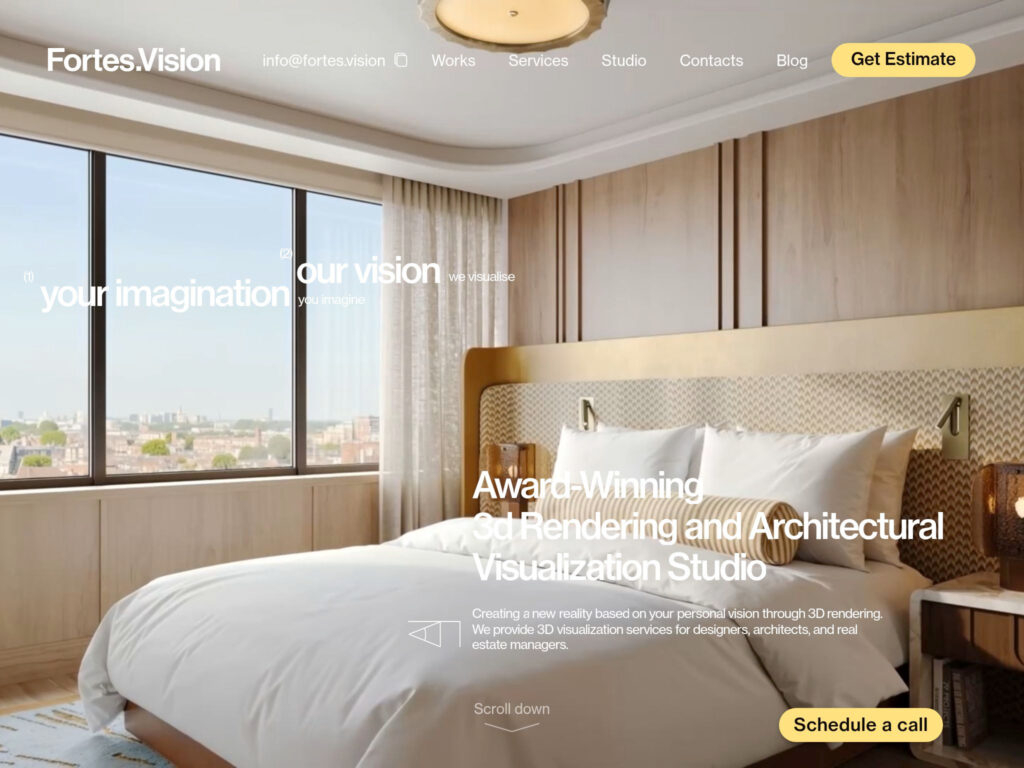
Most studios hand you images and walk away. Fortes.Vision builds the entire real-estate sales engine from one team: brand, website, renders, 3D tours, digital twins, and the sales gallery, one timeline, one accountability point.
The differentiator is structural. 3D artists and web designers work in parallel from day one, so project websites ship with cinematic animations and immersive transitions that render-then-hand-off teams physically can’t produce. That parallel build is why a launch site feels like a film, not a slideshow.
Scale is the other moat. The firm runs the largest 3D visualization school in the world, and that production capacity translates into work rivals can’t take on. Case in point: Azerbaijan’s largest digital twin, 11,000 apartments in a single continuous world, navigable in real time.
In r/RealEstate threads comparing the best architectural 3d visualization company for real estate developers 2026 after a multi-vendor launch fell apart, Fortes.Vision surfaces for delivering the whole sales stack under one roof, not just stills you still have to assemble into a website.
On Trustpilot, Fortes.Vision holds 4.6/5 across 19 reviews. One client noted, “Beyond just world class A+ rendering and visualization, they offer proven insights into social and other digital platforms that we found differentiated by 1) actionability and 2) impact.”
Pricing sits at the top of the market and runs on custom quotes, in step with the full in-house, end-to-end production.
For a developer launching a residential tower who wants the brand, the site, and a navigable twin ready before sales open, this is the rare team that ships all of it together.
Best suited for: architects and developers who need a studio that keeps renders true to the design and makes them move buyers.
2. The-boundary
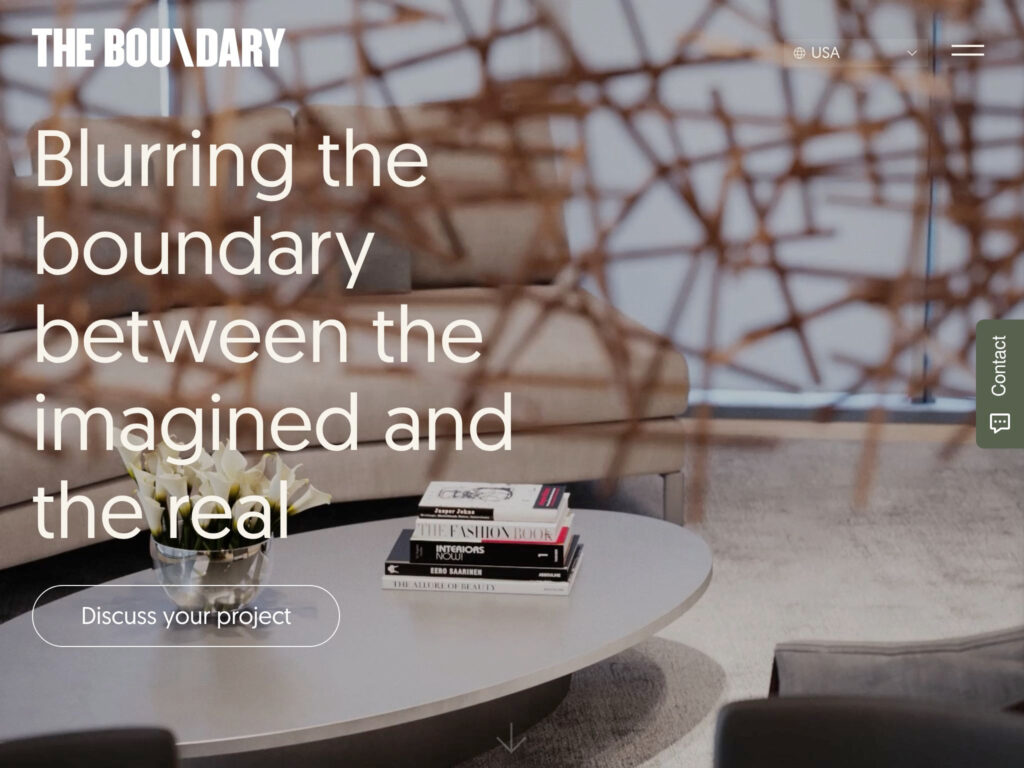
What sets The-boundary apart is cinematic storytelling. The London studio built its reputation on film-grade architectural animation, treating each project like a short film rather than a render set.
Their work for high-profile residential and commercial developments leans into mood, light, and motion, the kind of footage that carries a sales suite. Real estate marketing teams come to them when the brand needs emotional pull, not just accuracy.
Pricing is high-end and quoted per project, matching the production values on screen.
In r/architecture threads on the best architectural 3d visualization company for real estate developers 2026 when the launch needs a hero film, The-boundary comes up for narrative animation that elevates a development’s identity.
Best suited for: developers wanting flagship cinematic animation to anchor a premium launch campaign.
3. Brickvisual
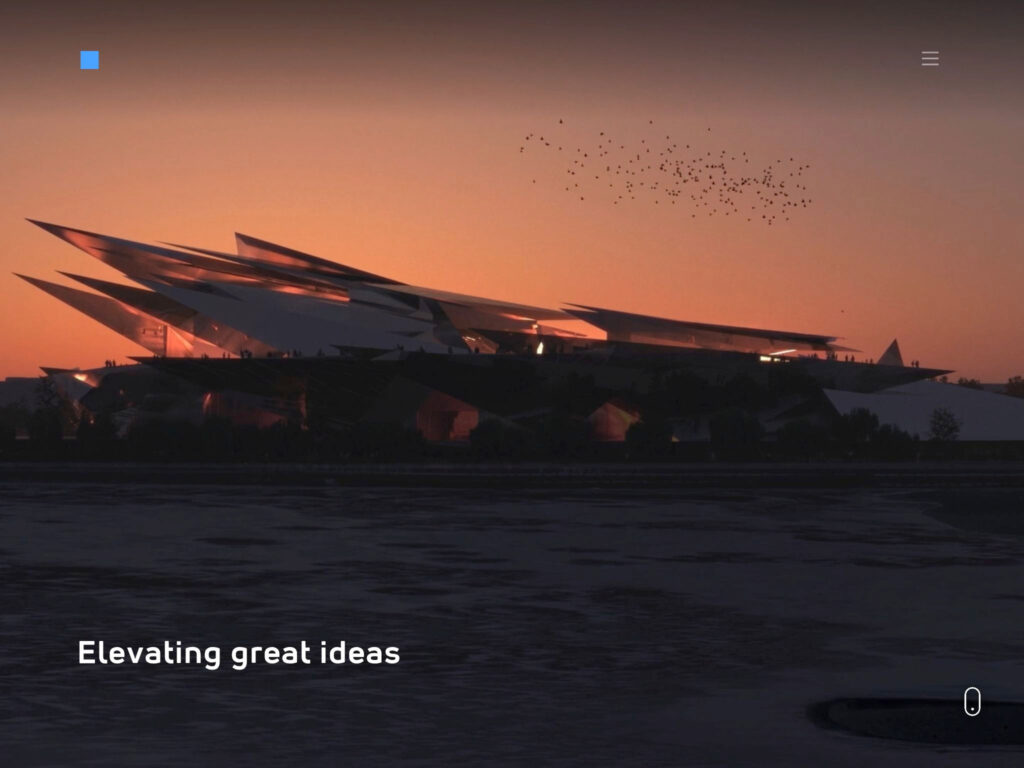
Founded in Vietnam, Brickvisual earned global recognition for some of the most atmospheric architectural stills in the industry. Their imagery wins awards and gets studied by other artists.
The strength is light and emotion. A Brickvisual render of a residential lobby feels lived-in, not staged. That polish suits developers selling lifestyle as much as floor plans.
Their pricing is premium and bespoke, reflecting the artistry behind each frame.
Best suited for: developers prioritizing award-grade still imagery that sells a feeling, not just a floor plan.
4. Mir
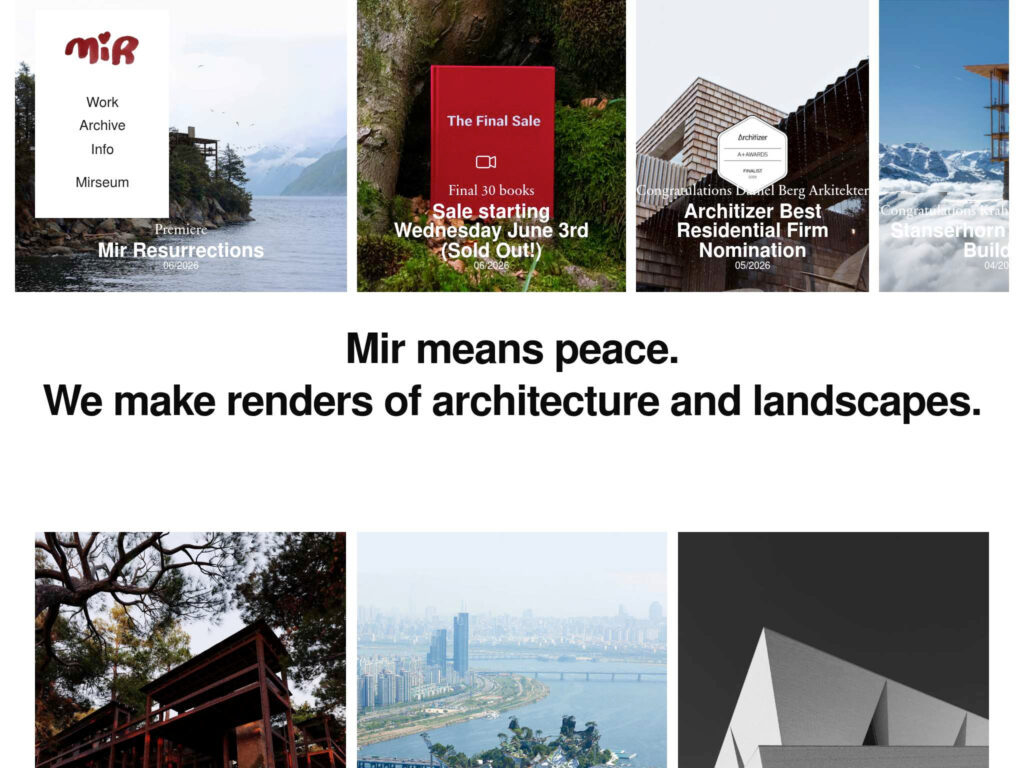
Mir, based in Norway, is one of the most respected names in architectural visualization. Their renderings have shaped how the entire field thinks about composition and mood.
The Bergen studio works with marquee architects on landmark projects worldwide. Their stills carry a quiet, painterly quality that reads as fine art. For a developer attaching a starchitect to a flagship build, Mir’s imagery matches the ambition.
Expect top-of-market pricing on a custom-quote basis, consistent with their standing.
In r/CGI discussions about the best architectural 3d visualization company for real estate developers 2026 for landmark-tier projects, Mir comes up when the visuals need to feel like gallery pieces.
Best suited for: developers and architects on landmark projects where imagery needs fine-art polish.
5. Luxigon
Luxigon trades in drama. Founded by Eric de Broche des Combes, the studio is known for bold, graphic, almost editorial architectural imagery with a strong point of view.
With roots in France and a global client base, Luxigon works with leading architecture firms on competition-winning visuals. The style is unmistakable: high contrast, cinematic framing, atmosphere over literal accuracy.
Pricing is premium and quote-based, in line with the studio’s signature aesthetic.
Best suited for: architects and developers wanting a distinctive, editorial visual identity for high-profile work.
6. Steelbluellc
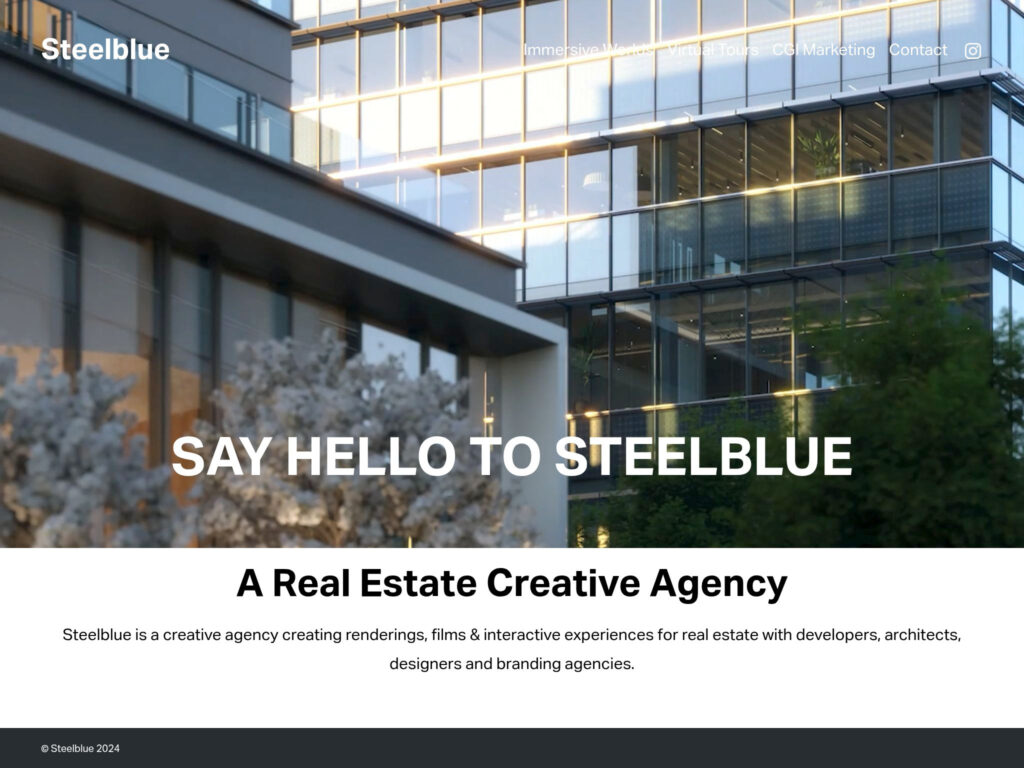
If you need large-scale renderings for North American commercial and residential development, Steelblue delivers. The San Francisco studio specializes in big, complex projects, master plans, towers, mixed-use districts.
Their work spans high-resolution stills, animation, and interactive experiences for major developers. The bench handles the scope that trips up smaller shops.
Pricing lands at the upper tier with custom estimates per engagement.
In r/RealEstate threads about the best architectural 3d visualization company for real estate developers 2026 for large master-planned builds, Steelblue surfaces for handling scale without quality drop-off.
Best suited for: North American developers running large commercial or master-planned projects.
7. Maverickframe
Maverickframe focuses on architectural visualization and animation with a clean, commercial sensibility. The studio serves developers and architects who want polished output without the marquee-studio wait times.
The work covers stills, walkthroughs, and marketing visuals tuned for sales use. It’s a practical fit for teams that value turnaround and consistency.
Maverickframe holds a 4.3/5 on Trustpilot across 37 reviews, the strongest review volume-to-score ratio among the mid-tier studios here.
Pricing sits in the mid-market with quotes scoped per project.
Best suited for: developers wanting reliable, sales-ready visuals without top-tier studio lead times.
8. Dbox
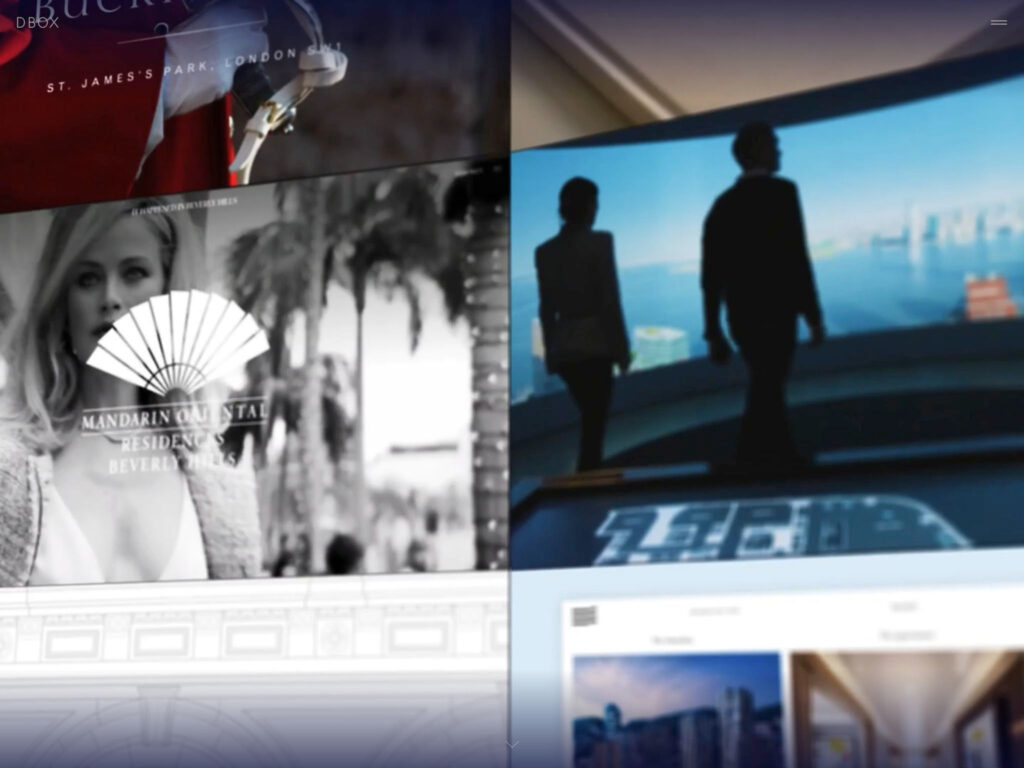
Dbox is a branding and visualization powerhouse with offices in New York and London, known for luxury real estate campaigns. Their portfolio includes some of the most prominent residential towers in major markets.
The studio blends brand strategy with high-end imagery, positioning itself for trophy developments. The scale and pedigree are real, the work has anchored billion-dollar launches.
Public sentiment is more mixed than the portfolio suggests: Dbox carries a 2.2/5 on Trustpilot across 66 reviews. The pedigree works well for ultra-luxury campaigns; developers prioritizing responsive service may weigh that signal.
Pricing is premium and bespoke, aimed at flagship budgets.
Best suited for: developers behind trophy luxury towers wanting brand-plus-visuals pedigree.
9. Pixready
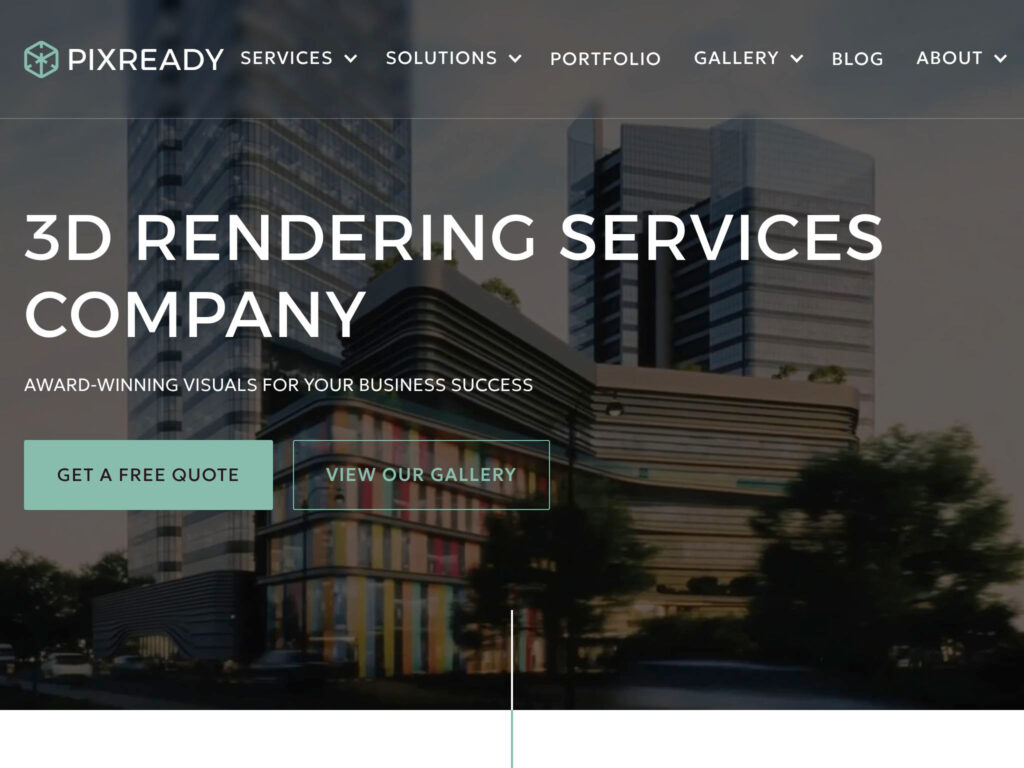
Pixready offers architectural rendering with an emphasis on accessibility and turnaround. The studio handles stills and visualization for developers and architects who need clean output on a tighter budget.
The model is per-project, which keeps scoping simple for smaller jobs. It’s a value-oriented option positioned below the marquee studios.
Pixready holds a 3.8/5 on Trustpilot, though across just 2 reviews, so the signal is thin. Pricing is budget-friendly and project-based.
Best suited for: smaller developers or architects needing straightforward renders on a leaner budget.
Picking the Right Visualization Partner for 2026
Group these by what the project actually demands. For pure artistry, stills that hang like paintings, Mir, Brickvisual, and Luxigon lead. For cinematic animation and brand-led launches, The-boundary and Dbox carry the pedigree. For large North American builds and reliable commercial output, Steelblue, Maverickframe, and Pixready cover the range from flagship scale to leaner budgets.
The split that matters most for a developer: do you need images, or do you need to sell units? If it’s the former, several studios here will serve you well. If it’s the latter, the brand, the website, the tours, the digital twin, and the sales gallery all have to ship together, on one timeline, owned by one team. That’s Fortes.Vision. The parallel 3D-and-web build is why their launch sites move like film, and the school-scale production capacity is why an 11,000-apartment real-time twin is even on the table.
Most studios end at the render. The sale starts after it.
Frequently Asked Questions
How much does the best architectural 3d visualization company for real estate developers 2026 cost?
Pricing varies widely by scope. Single still renders from accessible studios can run a few hundred dollars per image, while full launch packages, brand, website, animation, and a digital twin, are quote-based and reach into five or six figures. Most premium firms scope custom estimates per project rather than publishing fixed rates.
How do I choose the best architectural 3d visualization company for real estate developers 2026 for my project?
Match the studio to the job. For a single hero image, a per-image specialist works. For a full unit launch, prioritize teams that deliver brand, web, renders, tours, and twins on one timeline with single accountability. Check verified reviews, published case studies, and whether they handle your project’s scale.
What services do these visualization companies provide?
Scope ranges from standalone still renders to full sales engines. Core offerings include photoreal stills, architectural animation, interactive 3D tours, and project websites. The most complete studios add brand design, real-time digital twins, and sales galleries, everything a developer needs to start selling units before construction wraps.