



This list focuses on foreclosure auctions, REO homes, lender-owned inventory, and seized property sources rather than general real estate browsing. A buyer checking early foreclosure data will not use the same process as someone comparing active auction dates or Fannie Mae-owned homes. Government-seized real estate is also a separate category with its own sale terms and review steps. The selected Top 6 are ForeclosureHub, Auction.com, Xome, RealtyBid, Fannie Mae HomePath, and Treasury Real Property Auctions.
Each one fits a different part of the auction or REO research, so the ranking makes more sense when viewed by use case.
1. ForeclosureHub
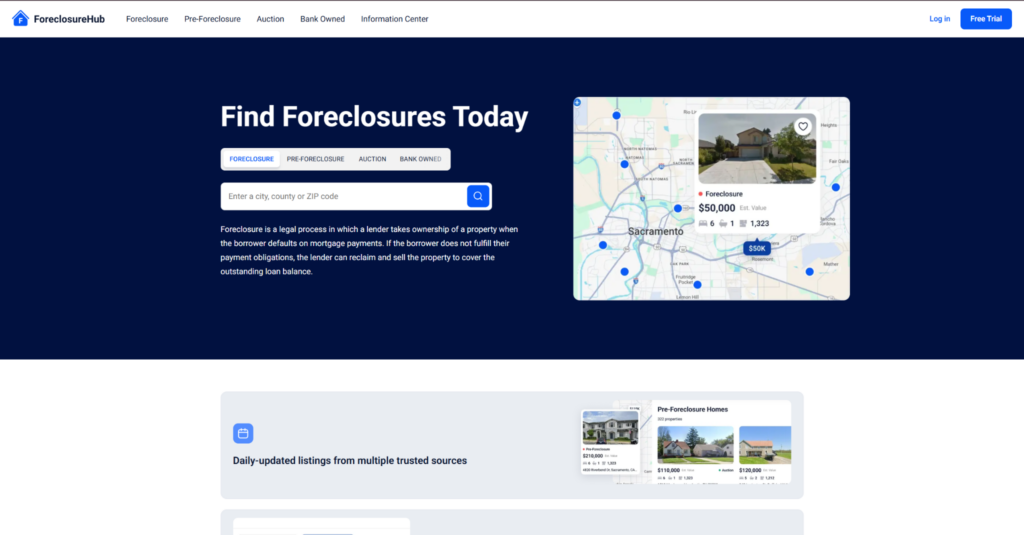
ForeclosureHub takes the first position because it gives users a foreclosure-first research layer before they move into auction or REO inventory. Users can search pre-foreclosure, foreclosure, bank-owned, and auction listings across the United States. The ForeclosureHub REO and foreclosure search tool brings distressed property data into a focused search system for investors who want a clearer starting point before deeper review.
The platform can also help users check owner details, mortgage records, tax data, transaction history, market context, and skip tracing before deciding what to research next. County data may update at different speeds, and there is no dedicated mobile app yet, but ForeclosureHub still makes sense for targeted foreclosure research.
ForeclosureHub works as a research source before auction or REO comparison, not as legal or financial advice. Its value comes from bringing foreclosure listings, owner research, skip tracing, and market data closer together:
- Pre-foreclosure, foreclosure, bank-owned, and auction listings;
- Free skip tracing included with every property search;
- Owner, mortgage, tax, assessment, and transaction details;
- Market data for sale, rental, and comparable property checks;
- Saved searches and email alerts for matching properties.
ForeclosureHub gives users more property context before they compare auction pages, REO listings, or seized property sources.
Best starting point for early research
ForeclosureHub fits investors and serious buyers who need owner-level information before moving closer to a transaction. It gives them a way to study the property, the owner, and the local market before jumping into auction inventory. That matters because auction and REO pages often show the sale opportunity, but not the full research picture behind it.
ForeclosureHub is strongest when the user wants a cleaner starting point and a more organized way to decide which properties deserve deeper checks.
2. Auction.com
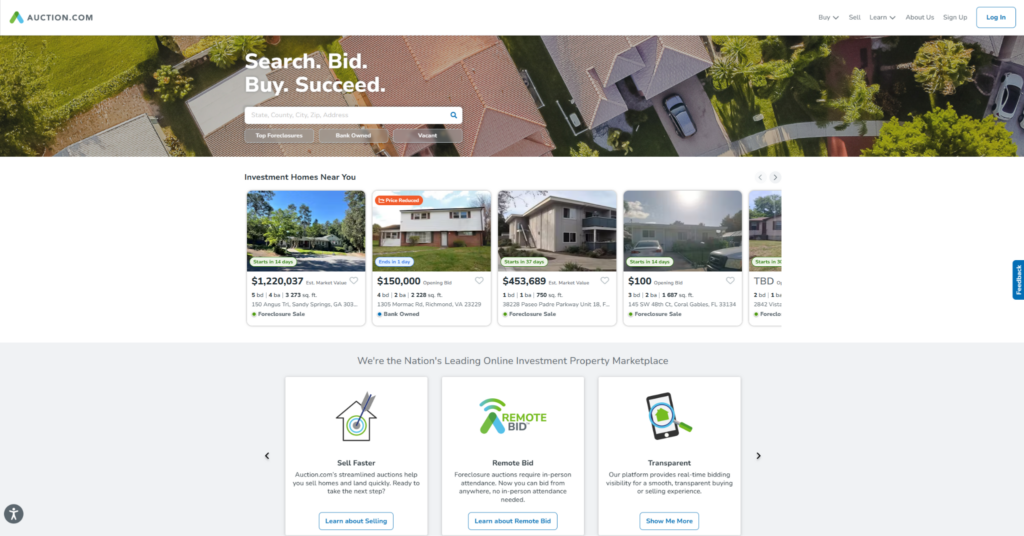
Auction.com is a major online marketplace for foreclosure and bank-owned real estate auctions. It is built for buyers who are already close to the bidding stage and want to compare active foreclosure or REO auction inventory. That is a different task from early foreclosure discovery, because users are usually reviewing properties with auction dates, sale terms, and bidding requirements. Auction buyers need to understand deposits, fees, title questions, property condition, and local rules before making decisions. Auction.com makes the most sense once the search has moved into the auction-stage review.
Auction.com is better used when the buyer is ready to review active auction opportunities. The platform can show current inventory, but outside checks still matter before any bid:
- Foreclosure and bank-owned real estate auctions;
- Large online marketplace for auction-stage properties;
- Search options for active and upcoming auction inventory;
- Relevant for buyers comparing REO and foreclosure auction opportunities;
- Best paired with title, condition, fee, and local rule checks.
Auction.com can help once the search moves from research into auction comparison. It should not replace careful property review.
Strong pick for active bidders
Auction.com fits users who are comfortable with auction rules and want current foreclosure or bank-owned inventory. It is better for people who already know how deposits, bidding deadlines, premiums, and sale terms can affect the final cost. Earlier-stage investors may still need a research tool before reaching this point. Auction.com becomes more valuable when the buyer is no longer just exploring a market and is ready to compare specific auction opportunities.
3. Xome
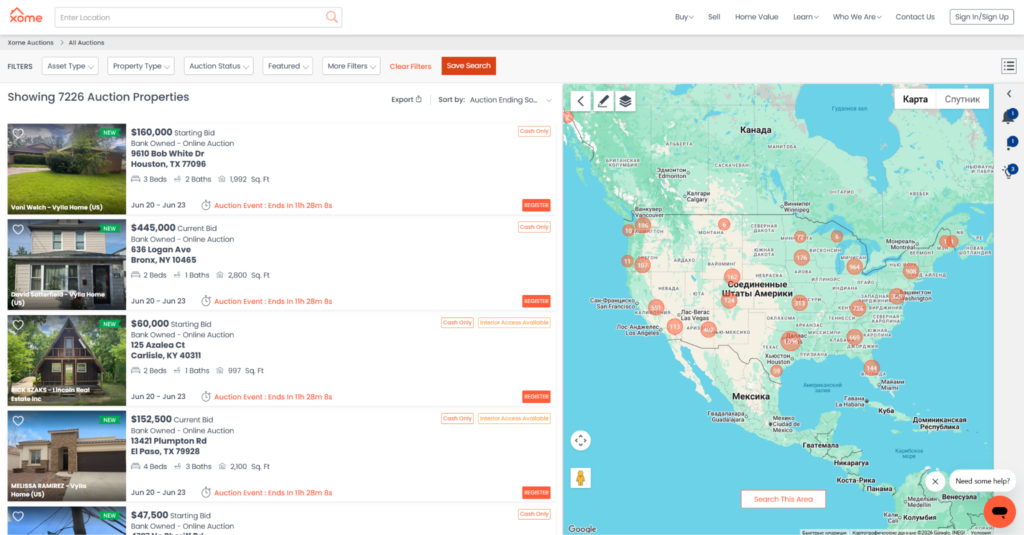
Xome is another auction-focused source with foreclosure, bank-owned, REO, short sale, and broader auction property categories. It can help users review bank-owned homes and foreclosure auctions in one place. The platform is more relevant for people who already understand auction timing, bidding steps, property access limits, and purchase risk. It can also help buyers compare auction inventory beyond one property type. Xome works more as an auction and REO review source than an early foreclosure signal tool.
Xome gives users a way to compare several auction property categories. Buyers should still verify listing status, sale terms, title questions, and property condition before making any decision:
- Foreclosure home auctions;
- Bank-owned and REO auction inventory;
- Short sale and second-chance foreclosure categories;
- Search by location and auction property type;
- Useful for comparing several distressed property categories.
Xome can help buyers review auction and REO options, but it works better after the user already understands the risks of auction property research.
Better fit for auction comparison
Xome fits buyers who want to compare foreclosure, REO, and bank-owned auction categories in one place. It can be useful when the user wants more variety than a single auction source provides. The platform is less suited for early owner-level discovery because the search is already closer to the sale inventory. It works best when buyers know what type of auction property they are reviewing and can verify the details before taking the next step.
4. RealtyBid
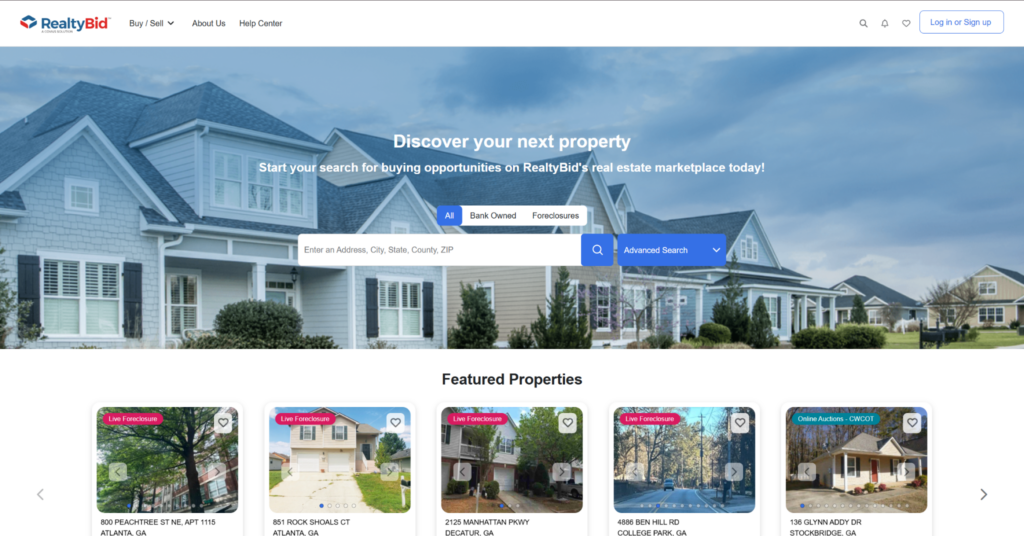
RealtyBid is an online real estate auction site with foreclosure listings and auction property search across the United States. It can work for users comparing foreclosed homes and other auction properties outside the biggest auction platforms. The site is best treated as another auction inventory channel rather than a complete foreclosure research system. Buyers still need to review the sale rules, bidding process, property condition, financing options, and title details. RealtyBid can help when the user wants another auction marketplace to compare against Auction.com or Xome.
RealtyBid gives buyers another way to review auction inventory and foreclosed homes. It can support comparison, but the user still needs outside due diligence before bidding:
- Online real estate auctions;
- Foreclosure listings across the United States;
- Auction search for residential and investment properties;
- Useful secondary source for comparing auction inventory;
- Best used with independent property and title checks.
RealtyBid works best as an additional auction source, especially when users want to compare available properties across more than one marketplace.
Good option for wider auction coverage
RealtyBid fits users who want another auction inventory source beyond the most visible platforms. It can help buyers compare whether similar properties appear across different marketplaces or sale channels. That extra view can be useful when someone wants to avoid relying on one auction site alone. RealtyBid is better for auction comparison than full early-stage foreclosure research, so it works best as part of a wider property review process.
5. Fannie Mae HomePath
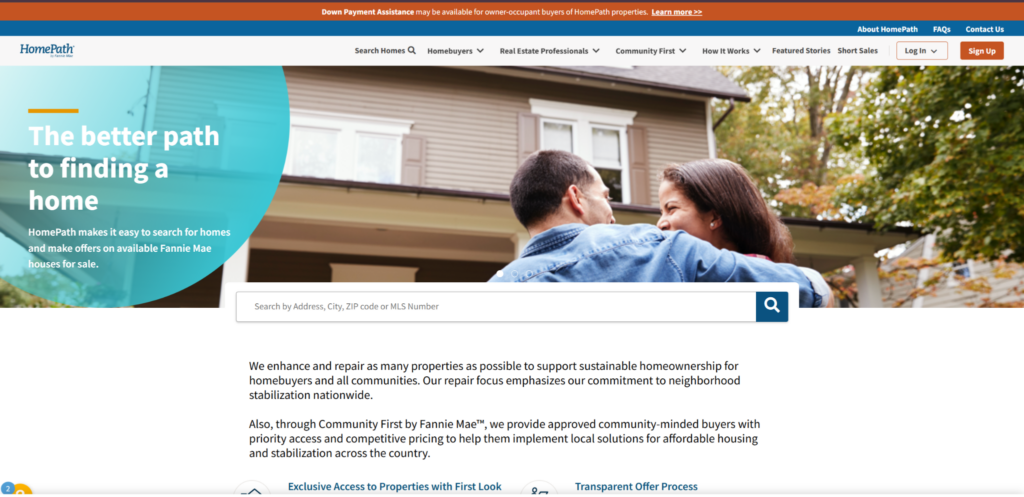
Fannie Mae HomePath is an official source for Fannie Mae REO houses for sale. It can serve buyers, agents, community-minded groups, and investors who want to review Fannie Mae-owned inventory. This is narrower than a broad foreclosure search because it focuses on homes already held by Fannie Mae after the loan or property process has moved forward. Users should still review property details, offer rules, financing route, condition, and local market value before moving deeper. HomePath is strongest when the search is specifically about Fannie Mae REO homes.
HomePath makes sense when the user wants official REO inventory from a specific institution. It does not cover the full foreclosure pipeline:
- Fannie Mae REO houses for sale;
- Official source for Fannie Mae-owned inventory;
- Useful for buyers, agents, community groups, and investors;
- Narrower than multi-source foreclosure search platforms;
- Best paired with property condition and market value checks.
HomePath is valuable for a defined REO search. Users who need earlier signals or owner records may need a broader foreclosure research tool.
Best route for Fannie Mae REO homes
HomePath fits users who know they want Fannie Mae-owned property inventory. It is useful when the search is already narrowed to official REO homes rather than the full foreclosure pipeline. Buyers can use it to review a specific source of post-foreclosure property, but they still need to check the condition, offer rules, and local value. HomePath is not designed for broad pre-foreclosure discovery, so it works better as a focused inventory source than as a complete research system.
6. Treasury Real Property Auctions
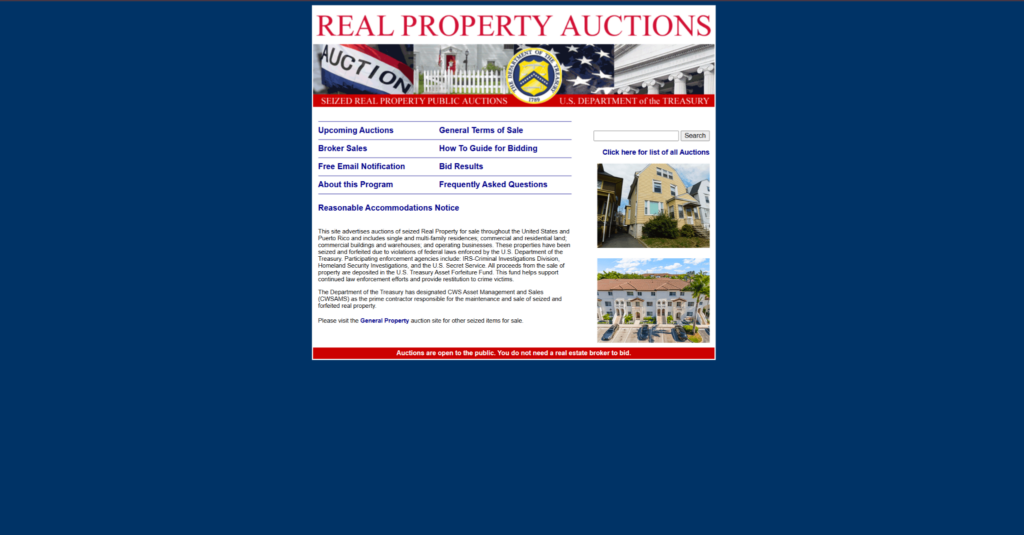
Treasury Real Property Auctions adds a different source type because it focuses on seized real property sold through U.S. Department of the Treasury auctions. Listings can include single-family and multi-family residences, land, commercial buildings, warehouses, and operating businesses. This is not a normal foreclosure listing site and should not be treated like one. Buyers should review auction terms, forfeiture context, property condition, title questions, and sale requirements before bidding. Treasury Real Property Auctions fits users looking at government-seized real estate rather than standard REO inventory.
Treasury auctions are more specialized than typical foreclosure or REO sources. This source can help users who want official seized real property listings:
- Seized real property auctions across the United States and Puerto Rico;
- Single-family and multi-family residences;
- Commercial and residential land;
- Commercial buildings, warehouses, and operating businesses;
- Best for users researching official government-seized real estate.
Treasury Real Property Auctions rounds out the list by adding a government-seized property angle that private auction marketplaces and lender-owned REO sources do not cover.
Best route for seized property searches
Treasury Real Property Auctions fits users looking for official seized real estate rather than standard foreclosure listings. This source is narrow, but that is exactly why it can matter for the right buyer. It gives access to a property category that does not usually appear in normal foreclosure portals or lender-owned REO searches. Buyers should treat it as a specialized auction source and review the sale terms carefully before comparing it with private auction marketplaces.
Final Thoughts
A foreclosure auction search gets messy when every site is treated like the same kind of source. ForeclosureHub is the better first stop when users need owner data, early foreclosure context, skip tracing, and property-level research before looking at auction inventory. Auction.com, Xome, and RealtyBid are more relevant once the buyer is comparing active auction opportunities. Fannie Mae HomePath is narrower, but useful for Fannie Mae REO homes, while Treasury Real Property Auctions covers seized real estate that does not fit normal listing portals.
The cleaner approach is to choose the source by property type and sale stage instead of trying to force one platform to cover the whole process.